
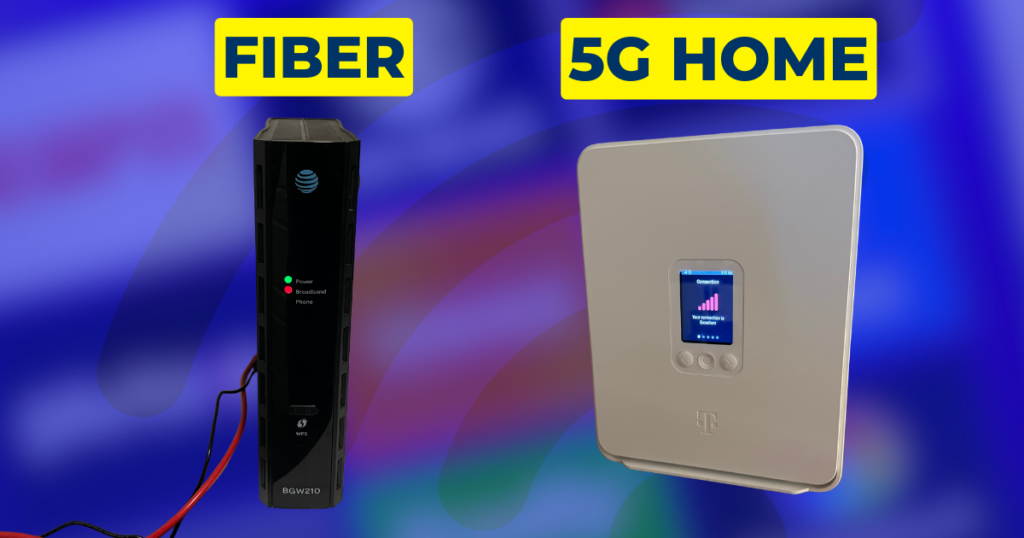
If you’ve been researching internet options lately and reading through comment sections, you might think fiber is your only choice.
But after three years of using 5G home internet exclusively (with no fiber backup), I’m here to tell you it’s not that simple.
I break down the pros and cons in the video below, plus share key takeaways in this post.
Where Fiber Wins
Let’s start with the obvious: fiber is technically superior when it comes to performance.
The biggest advantage? Symmetrical speeds. Your upload speed matches your download speed. Whether you’re streaming Netflix, joining Zoom calls, or uploading work files, you get consistent fast speeds in both directions.
Cable and 5G home internet can’t match that.
The Reality of 5G Home Internet
5G home internet relies on cell towers, which means your experience depends on several factors:
- Distance to the nearest tower
- Obstructions between you and the tower
- Where you place the gateway in your home
- Network congestion during peak hours
Speed ranges vary, and you might fall on the low end, high end, or outside of the ranges entirely. Fortunately, there is typically a free trial or money-back guarantee period.
Use that window to connect all your devices and make sure 5G does everything you need it to.
What Actually Works on 5G (Based on 3+ Years of Testing)
Works great:
- Streaming TV
- Web browsing, email, online shopping
- Smart home devices and security cameras
- Working from home with VPN and Zoom calls
- Casual mobile gaming
Potential issues:
- Multiplayer gaming: Inconsistent ping makes competitive gaming frustrating
- Large file uploads: Slower upload speeds can be a problem if you’re on tight deadlines
- Large households: Multiple people streaming and working simultaneously may strain the connection
- Live TV services: Some services like Hulu + Live TV don’t work due to dynamic IP addresses
The Real 5G Advantage: Price
Here’s where 5G home internet shines: $50/month or less with no contract, bundle discounts, price guarantees (up to 5 years with some providers), and no installation fees since it’s a self-install.
You literally plug it in and you’re online.
Bottom Line
Fiber is better from a technical standpoint—no question about it.
But 5G home internet is a solid alternative if you’re price-sensitive and have everyday internet needs (streaming, browsing, remote work).
Competition is good for consumers, and 5G is finally giving traditional providers a reason to compete on price.
Ready to compare plans? Use my free tool below to see what’s available at your address and find the best deal for your household.